FIFA's marquee event in the U.S. will certainly draw interest, but advance ticket sales are underwhelming ahead of CWC kickoff
It was a player himself who let the uncomfortable truth slip.
At a news conference on last week, LAFC forward Jeremy Ebobisse said the words everyone knew, but didn't necessarily want to hear: there are real questions as to how many people might attend Club World Cup matches.
"We need to see what the situation is going to be like when you get to the games," Ebobisse said. "It could be tough to feel how grand of an atmosphere it is if some of the stadiums maybe aren't living up to our internal expectations."
There it was. And in theory, it shouldn't be like this. The Club World Cup checks all of the boxes for a distinctly soccer tournament: big venues, big marketing campaigns, a shiny trophy, the global player names you know but rarely get to see in person. Yet less than a week before the tournament starts, ticket sales remain sluggish. The opener between Inter Miami and Al-Ahly is not yet sold out. The upper deck of Hard Rock Stadium in Miami, at this point, could look sparse.
FIFA wanted this to be a marquee event that will draw fans old and new to stadiums. The reality is, right now, there are questions as to whether that will actually come to fruition.
Getty ImagesFIFA's hopes for the tournament
It's worth noting how FIFA pieced this all together. The idea was – and still is – that the Club World Cup would be a glitzy affair that brings 32 club teams from all over the world to the U.S.. It would be a mix of European powers, South American legacy names, and the kind of intriguing sides in the other parts of the world neglected by the footballing consciousness – all played in a traditional and familiar World Cup format.
Nothing wrong with that.
But selling this has proven to be challenging. There are a multitude of reasons for that. The first, and most obvious, is that it is new. No one knows what it can or will be. This is the CWC's debut at this scale, in a 32-team format. In 20 years, it could be the most important club competition on the planet.
Right now, it isn't anything.
The second is a question of competition. It remains to be seen how seriously the clubs take it. The CWC is held at the end of the season, when most teams are running on fumes. Will this appear a series of postseason friendlies? Or something more competitive?
FIFA has countered with massive monetary incentives, reported demands that clubs play their biggest stars and by adding an extra transfer window to allow for the sale and registration of players in advance of the tournament.
AdvertisementAFPTicket prices, high and low
There seemed to be a widespread expectation, from FIFA at least, that fans would buy in. A broadcast rights deal was always going to be tricky to hash out, but tickets, in theory, would move. Preseason friendlies from European sides routinely sell out in the U.S.. The idea of a European regular-season fixture played across the Atlantic would not happen without the expectation of local fan support.
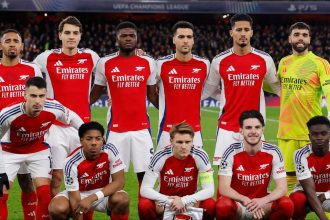
These will not be friendlies in which the likes of Vinicius Jr, Jude Bellingham, Erling Haaland and Kylian Mbappe just get brief run outs. The Club World Cup will transplant those players – and top-level coaches such as Pep Guardiola – to the United States for nearly a month. Real Madrid, Manchester City, Chelsea, Juventus and Bayern Munich will be participating, along with Lionel Messi’s Inter Miami and fellow MLS clubs Seattle Sounders and LAFC.
Top level soccer hasn't been this accessible in the U.S. since the 1994 World Cup. In the abstract, it makes sense.
But prices were high from the get go, with the opening game at $349 when tickets were first made available last December. Tickets for the final were even more steep, with a price point of $892 for the least expensive.
The fact that FIFA introduced "dynamic pricing" only complicated things. It's a smart money-making model, with prices changing based on individual matchups. It's why tickets for Real Madrid vs. RB Salzburg were more expensive than Botafago vs. Seattle Sounders.
The model has been a point of controversy among fans for some time, with the assumption that it leads to unnecessarily inflated prices – especially on the secondary as re-sellers look to increase their cut.
But it is also common practice across sports and the entertainment industry. And in some cases for the CWC, it has worked. Prices for Real Madrid's group games are different based on opponent. It costs more to see the Spanish giants play Al Hilal, for example, than it does Pachuca. The former of the two fixtures have since sold out.
Getty Images SportInterest level, price slashing
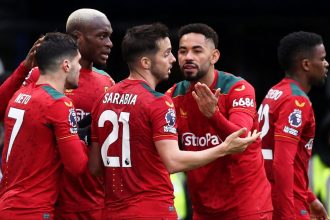
But outside of that, there are concerns. Nowhere is that clearer than with Inter Miami. FIFA had hoped that the Herons' fixture with Al Ahly at Hard Rock Stadium would be the perfect opener to the tournament: Lionel Messi on home turf to kick things off.
Yet, interest remains relatively limited. As of last week, you could get a ticket for the opening match as low as $55. Thousands of seats are yet unsold.
FIFA have been made sweeping changes in their prices across the country. As of June 8, football's organizing body slashed prices three times. They also offered incentives to encourage consumers to attend fixtures, including a package deal in which fans who buy 20 CWC tickets will have a guaranteed to buy a ticket to the 2026 World Cup final – without specifying an exact price point.
There are genuine concerns, meanwhile, that teams of lesser global repute might be playing in half-empty venues. The fixture between Ulsan and Mamelodi Sundowns – with all due respect to the heritage of the South Korean and South African clubs – can now be bought for $33 at Inter&Co Stadium.
Thousands of seats remain unsold. Even some games between bigger clubs are struggling to gain momentum. If the tournament began today, the Rose Bowl, one of the most iconic venues in the United States, would be half empty for a fixture between PSG and Botafogo – the reigning Champions League and Copa Libertadores champions.
Watch every FIFA Club World Cup game free on DAZNStream nowGetty ImagesLoyal fans who will pay up
Some fans of MLS clubs, though, have been willing to cough up regardless of the state of pricing. And that would make sense. There is a certain pride in using the CWC as a measuring stick for the league – or an opportunity to see your team face off against a European giant that would otherwise be far removed from a fixture list.
"When the first prices came out, I just bought one initially for, PSG by myself, and it was like $175 for upper deck ticket," Cameron Collins, president of Seattle Sounders Supporters' Group Gorilla FC, told GOAL.
Those who are involved in the soccer scene in the U.S. have also argued that preseason friendlies are a good proof of concept, and indicate that there will be interest as the tournament kicks off, visibility increases and actual soccer is played – even if it comes down to last minute sales.
"I've gone to preseason games that I think there's not going to be too many people, but the fans come out in force all the time," ESPN FC analyst Kay Murray told GOAL. "So yeah, they probably will come out for the Club World Cup. They surprise me every time, but American soccer fans are amazing and love the game."
It is easy to imagine, too, that die-hard fans are eager to pay whatever it takes to see their favorite international club play – especially if they are unable to travel to Europe wee- in, week-out. But they can only count for so many. There are not, for example, 90,000 Chelsea fans in Philadelphia, all of which who are willing to pay into the hundreds – if not more – to take in their side. And unlike a World Cup, when global fans travel to support their national teams, there won't be the same volume of travelers for individual clubs.